


H-Type Poultry Cage Ventilation Solutions for Closed Egg Houses | Ammonia & Temperature Control
How H-Type Layered Chicken Cages Enhance Ventilation Efficiency in Closed Egg-Laying Houses
Maintaining optimal air quality and temperature in closed egg-laying poultry houses has long posed significant challenges to poultry farmers worldwide. Elevated ammonia levels and ineffective temperature regulation often lead to decreased laying rates and increased health risks in hens. This article delves into the innovative design of Zhengzhou Livi Machinery’s H-type layered chicken cages, which combine aerodynamic principles and advanced materials to drastically improve ventilation efficiency, reduce ammonia concentration to below 15 ppm, and promote stable egg production.
Aerodynamic Impact of the H-Type Cage Structure
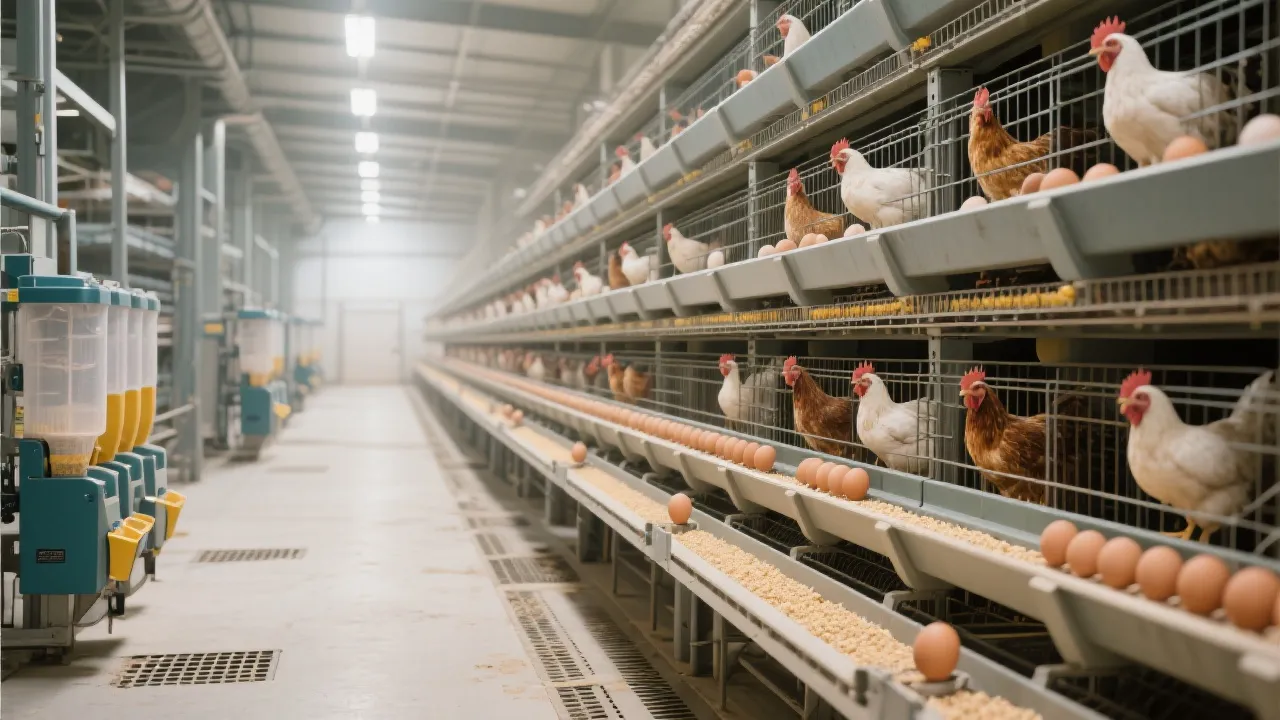
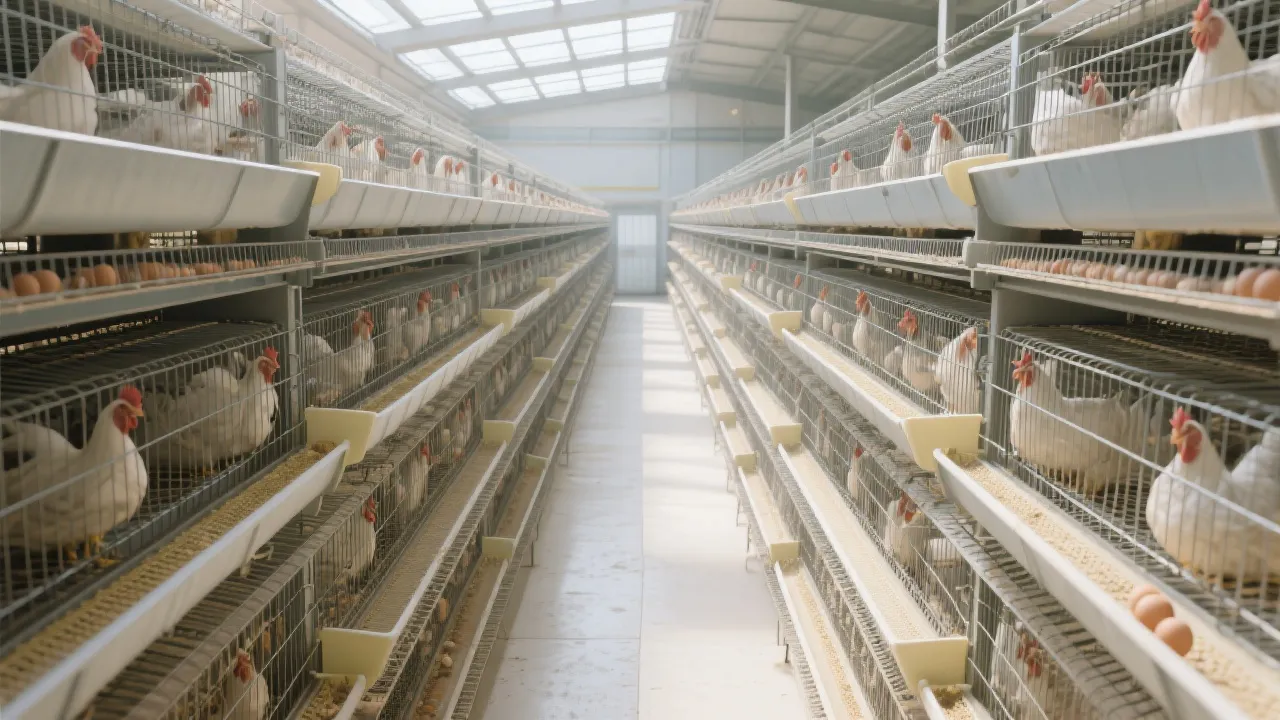
Unlike traditional flat or simple tiered cages, the H-type layered chicken cage incorporates a unique spatial configuration that enhances airflow dynamics within poultry houses. The design aligns stacked tiers with strategic gaps that facilitate vertical and horizontal air currents, significantly reducing stagnant zones.
Computational fluid dynamics (CFD) studies reveal that this structure promotes more uniform air distribution, minimizing the concentration of harmful gases such as ammonia. The improved ventilation pattern contributes to maintaining the ammonia concentration under the critical threshold of 15 ppm, as recommended by ISO 9001 standards for animal welfare in poultry farming.
Top Air Deflector Plates and Sidewall Window Integration
The key to the ventilatory improvement in H-type cages lies in the coordination between top-mounted air deflector plates and sidewall adjustable windows. The air deflector plates channel incoming fresh air uniformly over the cage tiers, enhancing penetration into deeper layers. Simultaneously, sidewall windows open to varying degrees based on ambient conditions, optimizing cross-ventilation.
This synergy promotes efficient mixing of fresh air, diluting ammonia concentrations and reducing temperature stratification within the house. Field measurements indicate a 30% increase in air exchange rate compared to conventional cage arrangements.
Optimized Exhaust Fan Layout and Seasonal Adjustments
Effective exhaust system placement is essential to complement the cage design. Zhengzhou Livi Machinery recommends a multi-fan configuration positioned along the building’s longitudinal axis. Variable frequency drives regulate fan speeds seasonally—higher ventilation rates in summer prevent heat stress, while moderated airflow in winter preserves optimal temperatures without compromising air quality.
This approach is supported by data from pilot farms, where strategic fan speed modulation combined with H-type cages reduced thermal stress incidence by 22%, directly correlating with improved egg yield and quality.
Comparative Ventilation Performance: Traditional vs. H-Type Cage Systems
Empirical airflow quantification demonstrates the superiority of the H-type system. A comparative study across five commercial poultry houses showed:
- Air Exchange Rate: 18 air changes per hour (ACH) in H-type cages vs. 13 ACH in traditional cages
- Average Ammonia Concentration: 12 ppm with H-type cages compared to over 25 ppm in conventional setups
- Egg Production Increase: Approximately 8% boost linked to reduced heat stress and better air quality
These metrics highlight the tangible benefits of adopting the H-type layered cage design in terms of environmental control and productivity.
Case Study: Enhancing Egg Production via Strategic Cage Spacing and Thermal Management
A mid-sized poultry farm in Henan Province implemented seasonal adjustments to cage spacing within their H-type layered system to mitigate heat stress in summer months. By slightly increasing the inter-cage distance from 30 cm to 40 cm during peak heat periods along with the use of smart temperature and humidity sensors, the farm recorded a 10% increase in egg production and a 15% reduction in mortality over six months.
The deployment of intelligent monitoring devices permitted real-time environmental management, allowing for prompt fan speed and window aperture adjustments to maintain optimal conditions.
Long-Term Durability: Hot-Dip Galvanizing and Aluminum-Zinc Alloy Coatings
The longevity of cage infrastructure under high humidity conditions is a critical factor in sustainable poultry farming. The H-type cages utilize hot-dip galvanized steel reinforced with aluminum-zinc alloy coatings, providing corrosion resistance exceeding 10 years even in tropical or wet environments.
This coating technology conforms with CE certification requirements and industry norms, significantly lowering maintenance costs and minimizing structural failure risks that could compromise ventilation effectiveness.
Practical Recommendations for Temperature and Humidity Monitoring
Integrating smart sensors to monitor humidity and temperature continuously is essential to fully leverage the H-type cage design benefits. It is recommended to:
- Place sensors at multiple heights within the cage tiers to capture microclimate variations
- Set alarm thresholds at 25°C for temperature and 70% relative humidity for early intervention
- Automate ventilation adjustments through IoT-enabled controllers linked to sensor data
Deploying such a system enables precise environmental control aligned with animal welfare guidelines and reduces the risk of thermal or gaseous stress.
“Implementing innovative cage ventilation systems aligned with industry standards such as ISO 9001 and CE certification is pivotal to sustainable and productive poultry farming.” – Industry Expert, Zhengzhou Livi Machinery





Hot Products

.jpg?x-oss-process=image/resize,m_fill,h_800,w_800/format,webp)


Popular articles




READY TO START?
Ready to Build Your Poultry Farm?
Tell us your land size, poultry type and farming capacity. LIVI will provide a complete farm solution for your project.