


Large-Scale Poultry Farming Trends: How Automated Systems Raise Efficiency
Across Africa, the Middle East, Southeast Asia, South America, Central Asia, and Europe, large-scale poultry farming is moving toward higher stocking density, tighter biosecurity, and more predictable management. One consistent lever is automation—not as a “nice-to-have,” but as a practical way to standardize daily operations, reduce labor dependency, and keep production stable.
As a manufacturer and turnkey solution provider, Livi Machinery focuses on integrated systems—automatic feeding, drinking, manure removal, egg collection, and poultry house climate control—often paired with an H-Type layer chicken cage system for commercial egg production.
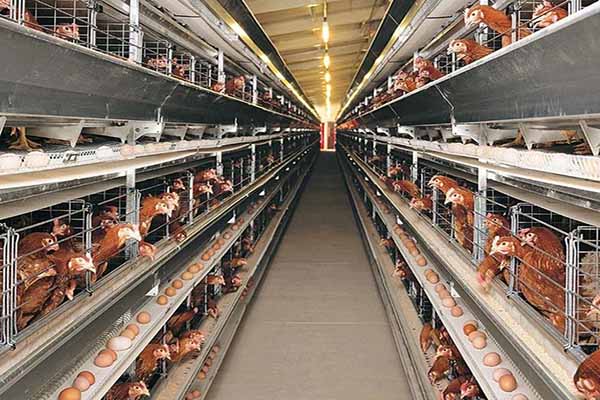
Related equipment on this page: High-efficiency H-Type Layer Cage designed for 5,000–30,000 birds, supporting streamlined feeding, cleaning, and egg handling in large-scale layer houses.
What’s Driving Automation in Large-Scale Poultry Farming
Labor efficiency & repeatability
Automated routines help reduce manual handling and ensure consistent timing for feeding, watering, manure handling, and egg collection—especially important where labor availability or training levels vary.
Production stability
Stable daily management reduces operational fluctuations. When house environment and routines are more consistent, management becomes easier to standardize across multiple houses or sites.
Better use of space
H-Type layer cage systems support higher-density layouts in a controlled way, allowing commercial farms to scale output per house footprint while keeping workflows organized.
Core Automated Systems and Their Operational Role
Modern poultry farm automation equipment is typically built as a set of coordinated subsystems. In practice, farms select the automation level based on target capacity, local labor cost, power stability, house design, and upgrade vs. new-build constraints.
| System | What it does in daily operation | Why it matters for large-scale farms |
|---|---|---|
| Automatic feeding | Delivers feed along cage rows in a controlled, repeatable schedule. | Supports consistent distribution across high-capacity houses; reduces manual feed handling and improves workflow discipline. |
| Automatic drinking | Provides stable access to water through automated lines designed for cage systems. | Reduces daily labor and helps maintain consistent flock access to water across different sections of the house. |
| Automatic manure removal | Removes manure through mechanized systems matched to cage-row layout. | Improves cleanliness and reduces manual removal intensity; supports house hygiene routines at scale. |
| Automatic egg collection | Collects eggs from cage rows and moves them to a central handling point. | Standardizes collection, reduces manual handling steps, and helps organize egg handling for higher daily output. |
| Poultry house climate control | Supports ventilation and temperature management aligned to house design and bird density. | A key requirement for higher-density production; helps operators maintain a workable environment and stable routines. |
Practical note: automation works best when cage layout, aisle space, and service routes (feed, eggs, manure, maintenance access) are planned as one system—this is where H-Type layer cage houses are commonly paired with integrated equipment lines.
How H-Type Layer Cage Systems Support Efficient Scale
Designed for space utilization
The H-Type structure is engineered to use house volume efficiently. It supports organized row arrangements and clear service routes—important for large flocks where daily tasks must be predictable.
- Works with automated feeding and drinking lines along cage rows
- Built for streamlined egg handling and manure management workflows
- Facilitates cleaning and routine inspection with clearer access paths
Materials & durability for commercial farms
Livi Machinery’s high-efficiency H-Type layer chicken cage uses Q235 steel and protective surface treatments (hot-dip galvanizing and Al-Zn coating options) to enhance corrosion resistance for long-term operation in poultry-house environments.
Typical service life: 15–20 years (influenced by humidity, cleaning chemicals, ventilation design, and maintenance routines).
Typical Application Scenarios by Market
While farm models differ by region, the need for standardized operations is consistent. The following scenarios reflect common decision factors when adopting poultry farm automation equipment and H-Type cage systems:
Africa & Middle East
Projects often emphasize scalable layouts, streamlined labor management, and robust equipment selection. Climate control planning is frequently a key part of house design for stable operation.
Southeast Asia
High humidity and intensive production schedules often drive demand for corrosion-resistant cage structures and well-planned ventilation and temperature management.
South America & Central Asia
Many farms focus on practical automation modules that reduce daily workload and support consistent routines, especially as operations expand from mid-size to larger commercial capacity.
Europe
Projects typically require clear equipment specifications, quality control, and compliance alignment. Automation is used to standardize operations and improve day-to-day management efficiency.
Implementation Approach: From Planning to Integration
For new-build or upgrade projects, the most effective automation outcomes come from treating the poultry house, cage system, and equipment lines as one integrated plan.
- Capacity & house layout definition: confirm target flock size (e.g., 5,000–30,000 layers) and house dimensions to match an H-Type cage arrangement.
- System selection: choose automation modules—feeding, drinking, manure removal, egg collection, and climate control—based on operational needs and site conditions.
- Material & surface protection planning: align corrosion protection options (hot-dip galvanizing / Al-Zn coating) with local humidity and cleaning routines.
- Installation & commissioning support: ensure lines and cage rows are calibrated for stable day-to-day operation and maintainability.
- Ongoing technical support: establish maintenance and inspection routines to keep system performance stable over time.

Hot Products

.jpg?x-oss-process=image/resize,m_fill,h_800,w_800/format,webp)


Popular articles

READY TO START?
Ready to Build Your Poultry Farm?
Tell us your land size, poultry type and farming capacity. LIVI will provide a complete farm solution for your project.