


How to Choose the Right Automatic Poultry Equipment for a Large Farm in Africa
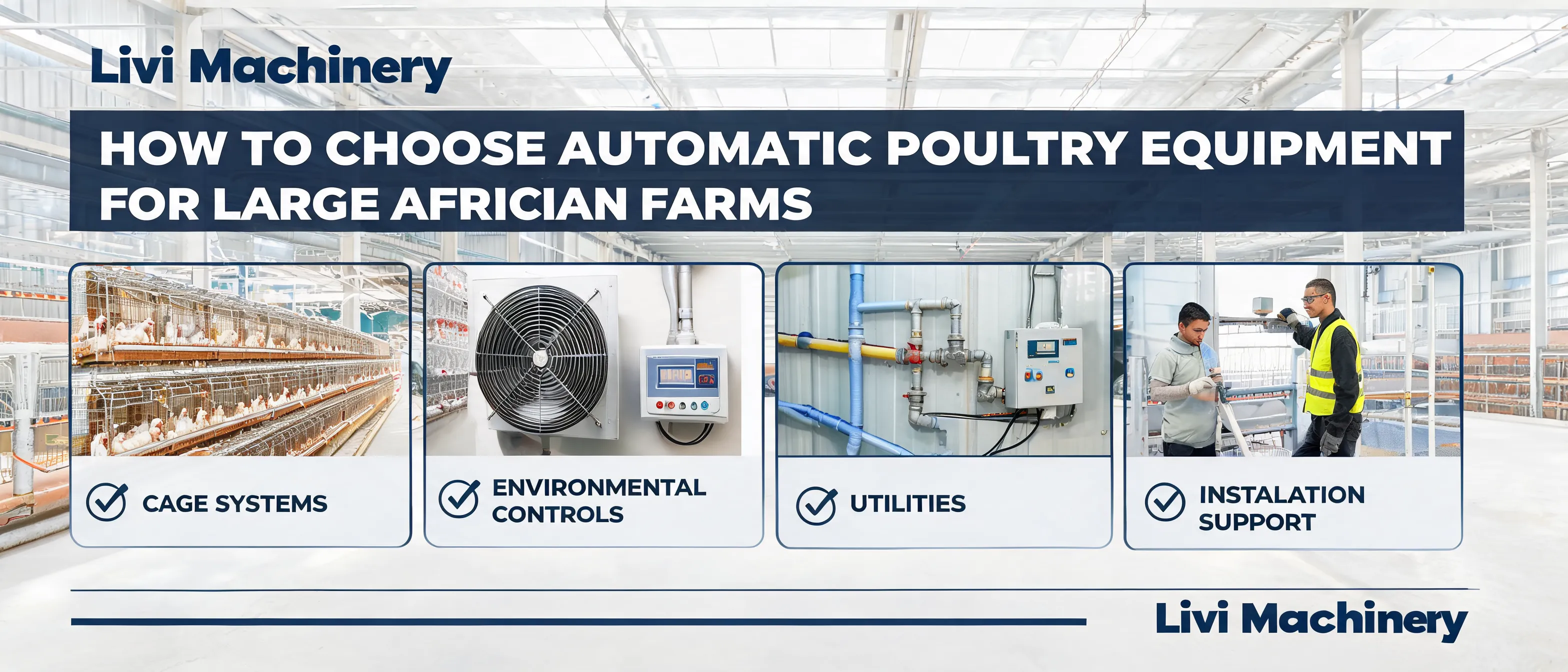
Choosing automatic poultry equipment for a large farm in Africa is a project-design decision, not simply a cage purchase. The selected system needs to match the poultry type, target flock size, poultry house dimensions, climate, available land, utility conditions, labour plan and investment budget. When these elements are considered together, investors can build a poultry house that is more practical to install, operate, maintain and expand.
Livi Machinery provides integrated poultry equipment planning for layer, broiler, rearing and floor-raising projects. Our approach connects poultry house layout, cage or floor system selection, feeding, drinking, manure removal, egg collection, ventilation and environmental control into one coordinated solution rather than treating each item as an isolated purchase.
Start with the conditions of the poultry project
A large poultry farm requires clear project inputs before equipment can be selected responsibly. A system that works well for one location may not be suitable for another if the house structure, temperature, electricity supply or management capacity is different.
Choose the housing and production system before choosing individual equipment
For large farms, the poultry housing model determines the basic equipment configuration. It affects bird density, aisle requirements, manure handling, ventilation design, daily workflow and the level of automation that can be used effectively.
| System type | Typical project fit | Main planning consideration |
|---|---|---|
| A-type layer cage system | Projects with relatively sufficient land, a moderate budget, small-to-medium scale production, or phased automation plans. | Provides a clear layout and can be appropriate where easy observation and gradual system upgrades are priorities. |
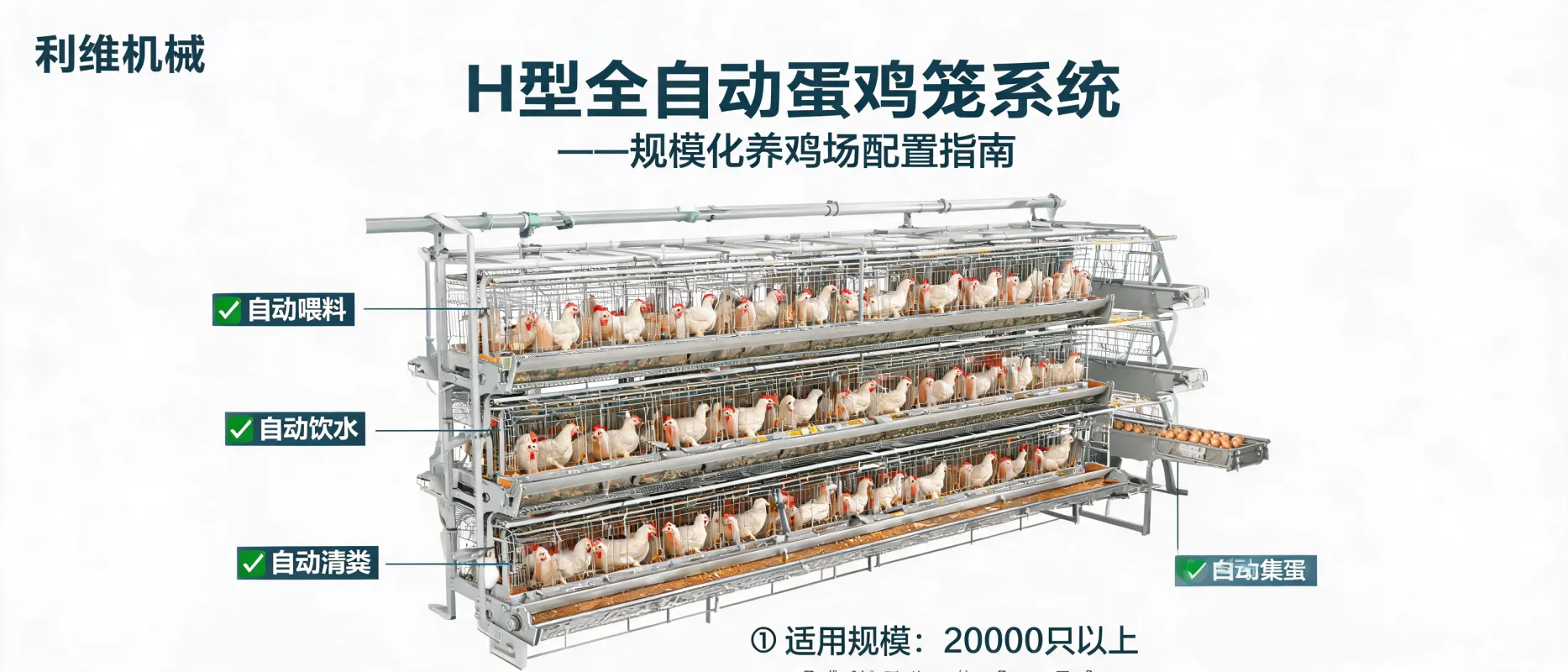
| H-type layer cage system | Larger layer farms seeking higher vertical use of house space and centralised automated management. | Requires coordinated planning for structure, power, ventilation, manure removal, egg collection and maintenance access. |
| Broiler cage system | Commercial broiler projects requiring structured feeding, drinking and manure-management processes. | Bird handling, environmental control and the operational workflow for each production cycle should be considered early. |
| Rearing or floor-raising system | Chick and pullet projects, or broiler operations designed around floor management. | The equipment plan should support the birds’ age, stocking approach, heating or ventilation needs and daily management method. |
Neither A-type nor H-type cages are automatically the better choice in every case. The right system depends on the project conditions and the intended level of operational control.
Build an automatic poultry farm as an integrated system
Automatic poultry equipment is most effective when the equipment systems work together. Automation can reduce repetitive manual work and support more consistent management in large houses, but it also requires dependable utilities, trained operators, routine maintenance and sensible backup planning.
Feeding and drinking
Automatic feeding systems distribute feed to troughs or pans according to the selected poultry system. Drinking lines, nipple drinkers, filters and pressure-regulating components are planned to support reliable water delivery and help manage leakage.
Manure and egg handling
Manure removal equipment supports a cleaner house environment in cage projects. For layer farms, automatic egg collection can centralise egg handling and reduce the repetitive work involved in manual collection.
Controls and electrical coordination
Motors, conveyors, controllers, lighting and environmental equipment need a coordinated electrical plan. Stable power and an appropriate backup arrangement are especially important where automated systems are used.
Design environmental control for African climate conditions
Environmental control should be designed for the actual location of the poultry farm, not copied from a standard layout. Across Africa, temperature, humidity, rainfall patterns and utility conditions can vary significantly between countries and regions.
- Hot areas: consider house orientation, roof insulation, fan capacity, cooling-pad area, air movement path, drinking-water temperature, stocking density and backup generation.
- Humid areas: cooling pads must be used with attention to internal humidity. Excessive use without proper ventilation can keep the house too wet.
- Cooler areas or seasonal cold periods: insulation and minimum ventilation need to work together. Closing the house completely to retain heat can reduce air quality.
- Power-constrained locations: evaluate the electrical load of fans, feeding lines, manure belts, egg collection and controls, then plan protection and backup systems accordingly.
Plan poultry house space beyond bird capacity
The required poultry house area cannot be calculated from bird numbers alone. The same flock size can require different building dimensions depending on whether the project uses A-type cages, H-type cages or a floor-raising system.
A workable poultry house design should allow for cage rows or floor equipment, feed and service aisles, staff access, egg collection areas where applicable, manure discharge routes, feed storage, fan and cooling-pad positions, electrical equipment, operational space and biosecurity separation. For expansion projects, it is also useful to reserve access routes and service capacity for future houses or additional equipment.
Understand what affects poultry equipment investment
Large poultry farm costs should not be estimated only by the price of a cage set or by a cost per bird. The final investment depends on the scope of the project and local conditions.
Construction, logistics, feed, labour and utility costs vary by country and city. A project-specific layout and equipment list are more useful for decision-making than a generic long-term price figure.
Check delivery, installation and maintenance readiness
For cross-border poultry projects, equipment delivery and installation preparation are part of the solution. Equipment is normally packed and loaded according to its dimensions, weight and total project quantity. The delivery process may include equipment-list confirmation, packing, container loading, export documents, sea freight, destination clearance and inland transport.
Before installation begins, the poultry house structure, floor condition, power supply, water source, equipment storage area and installation team should be ready. Typical installation work includes layout marking, cage frame and mesh assembly, feed and water line installation, manure system installation, egg collection installation where required, electrical connection, no-load testing and operator training.
Routine inspection is essential after commissioning. Bolts, chains, motors, bearings, belts, drinkers, pressure regulators, feed troughs and electrical components should be checked regularly. Unusual noise, belt misalignment, feed blockage, water leakage or motor overheating should be investigated promptly.
Prepare the right information for a tailored equipment proposal
Livi Machinery can help investors assess a large poultry farm project from the poultry house layout through equipment configuration, shipping preparation, installation guidance and operator training. To prepare a practical automatic poultry farm solution, please provide the following information:
- Country and city of the project
- Poultry type: layers, broilers, chicks, pullets or floor-raised birds
- Target bird capacity and planned number of poultry houses
- Available house dimensions or land dimensions
- Local climate and known power or water conditions
- Preferred automation level and project budget considerations
With these details, the Livi Machinery team can prepare a suitable poultry house layout, recommended equipment configuration, preliminary container requirement estimate and project-specific quotation basis.



Hot Products

.jpg?x-oss-process=image/resize,m_fill,h_800,w_800/format,webp)


Popular articles


READY TO START?
Ready to Build Your Poultry Farm?
Tell us your land size, poultry type and farming capacity. LIVI will provide a complete farm solution for your project.