


Automated Poultry Systems: Enhance Egg Production & Farm Efficiency for Large Operations

Revolutionizing Poultry Farming: How Automated Systems Transform Egg Production Efficiency
In the dynamic landscape of modern agriculture, African poultry farmers face unique challenges—from labor shortages to climate variability—all while striving to meet the continent's growing demand for protein. The solution lies not in traditional methods but in embracing technological innovation. Automated chicken farming systems have emerged as a game-changer, offering a path to increased productivity, reduced operational costs, and sustainable growth.
"Our farm in Kenya increased egg production by 18% within three months of implementing an automated system, while reducing labor costs by nearly half. The difference in consistency and bird health is remarkable." — James Mwangi, Operations Director, Nairobi Poultry Ltd.
The Productivity Gap: Traditional vs. Automated Systems
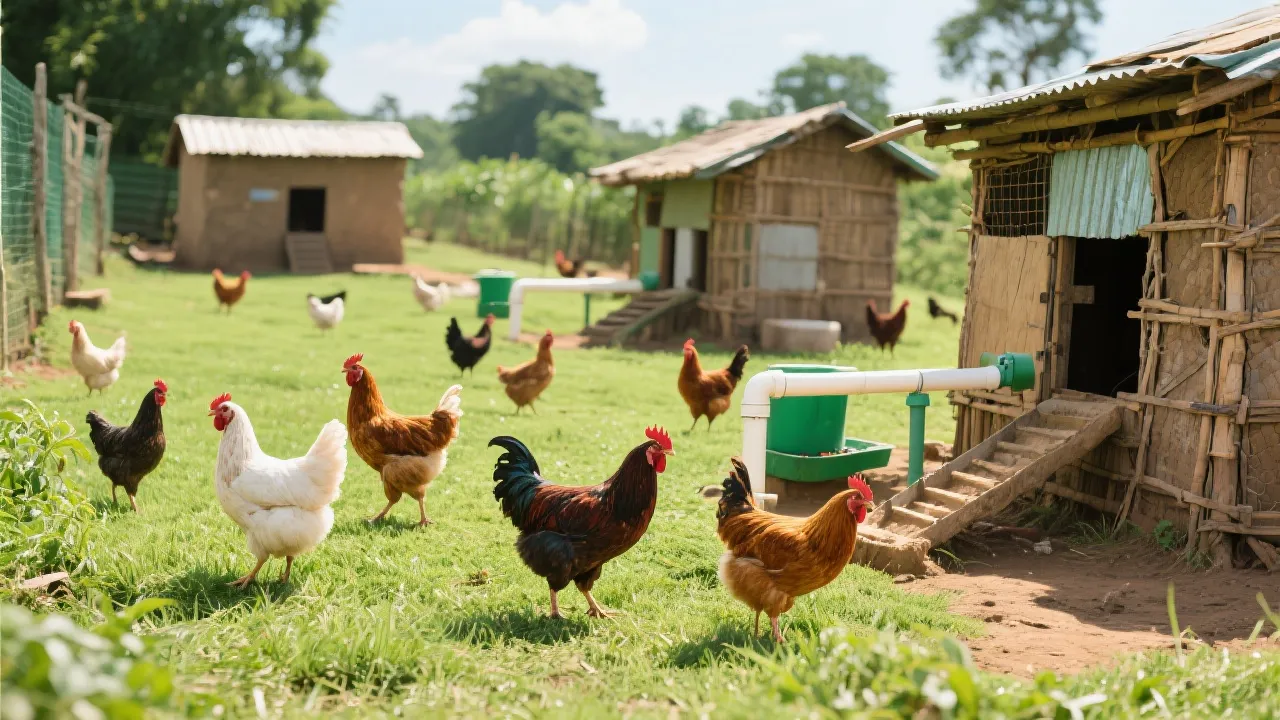
Traditional poultry farming in Africa typically relies on manual labor for feeding, egg collection, and waste management—processes that are not only time-consuming but also prone to human error. Studies show that conventional farms lose up to 25% of potential egg production due to inconsistent environmental conditions and handling stress.

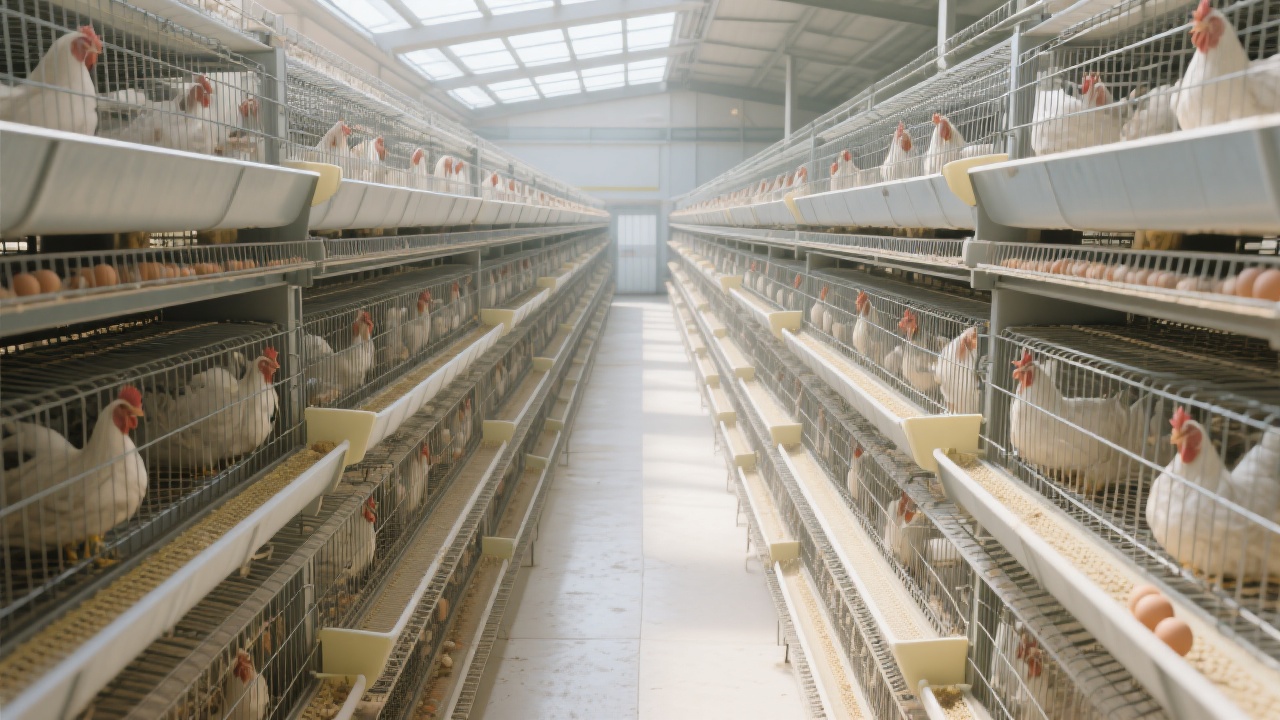
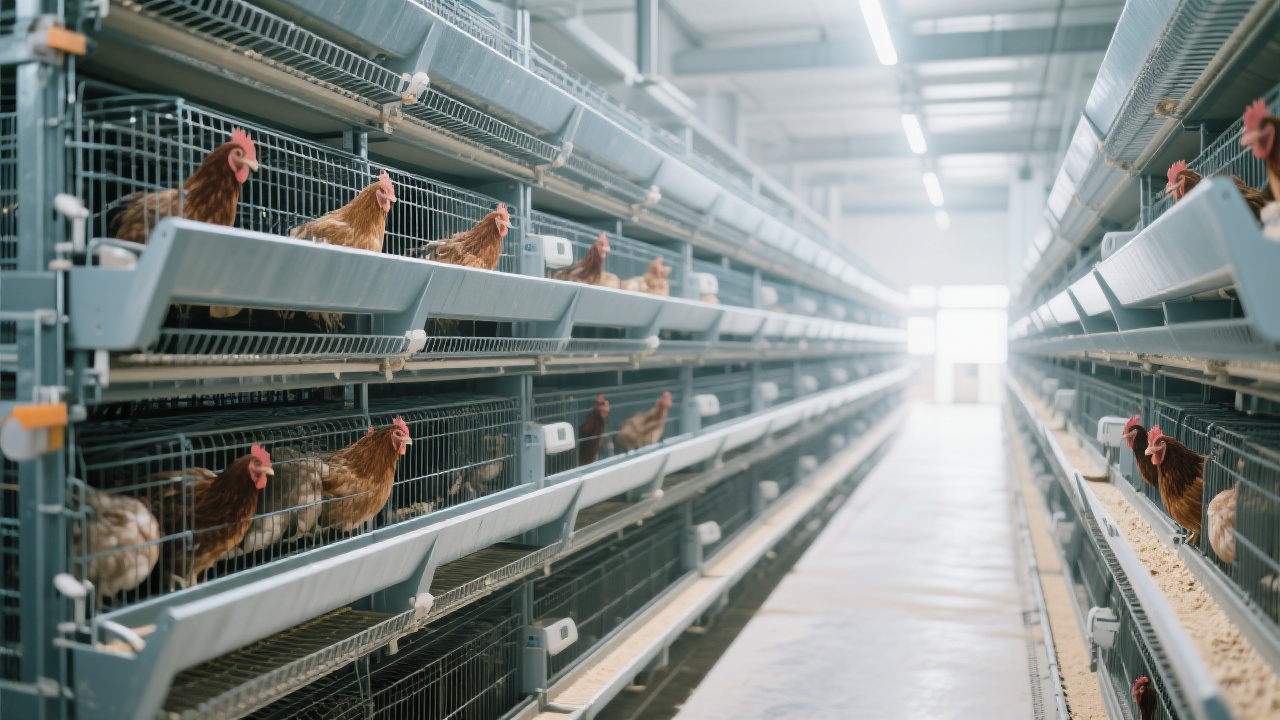
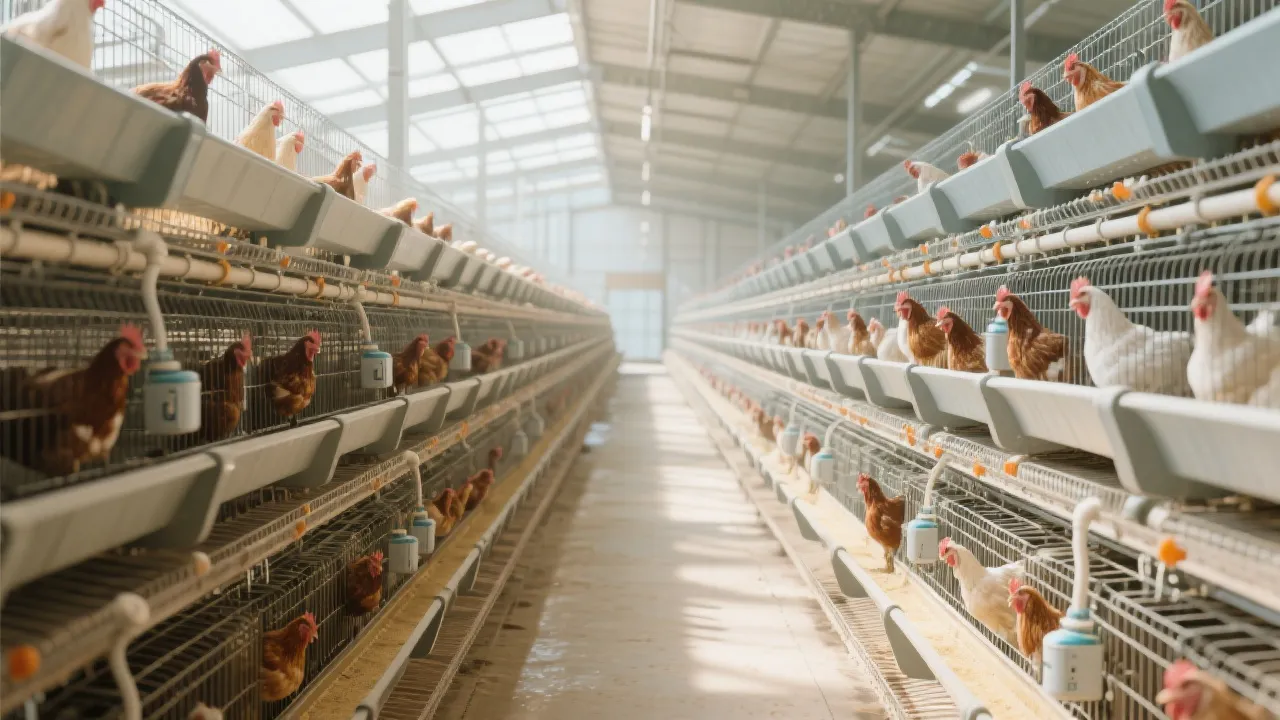
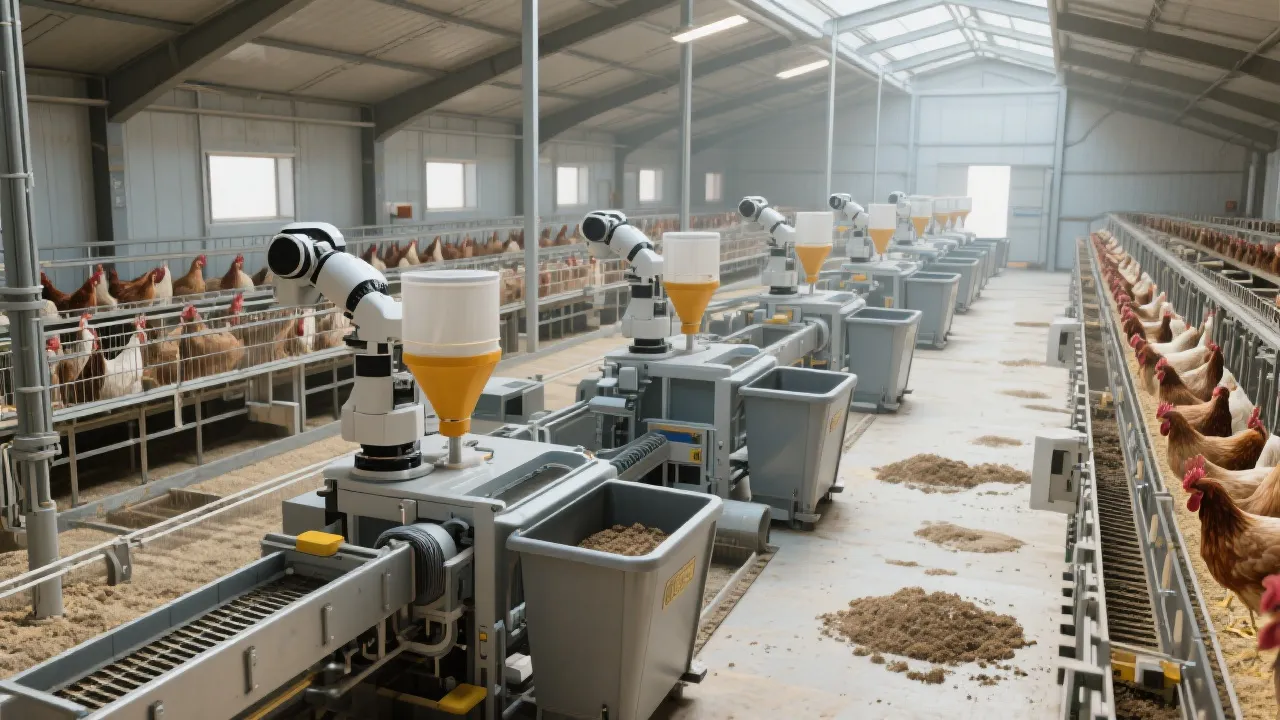
Automated systems address these inefficiencies through integrated technologies designed for optimal bird welfare and production. A typical automated setup includes H-type layer cages, precision climate control, automated feeding systems, and robotic egg collection—all working in harmony to create the ideal environment for maximum egg-laying potential.
From雏鸡 to Egg: A Comprehensive Automation Approach
Successful egg production begins long before the first egg is laid. Automated systems manage the entire lifecycle with precision:
Brooding Phase (0-6 Weeks)
Maintaining consistent temperature (32-35°C initially, decreasing by 2-3°C weekly) is critical for雏鸡 survival. Automated climate control systems with multi-point temperature sensors ensure uniform heating, resulting in up to 95%雏鸡 survival rates compared to 75-80% in manual operations.
Grower Phase (7-18 Weeks)
Precision feeding systems deliver the exact nutrient mix needed for optimal growth, while automated lighting controls simulate natural day length to promote healthy development. This results in uniform flock weight and earlier onset of lay by 5-7 days.
Laying Phase (19+ Weeks)
Automated egg collection systems gently handle eggs within minutes of laying, reducing breakage by up to 80%. Combined with optimal lighting (16 hours of light), temperature (20-24°C), and humidity (50-60%) control, these systems consistently achieve 90-95% peak production rates.
The Economic Impact: ROI That Makes Sense
While the initial investment in automation may seem significant, the return on investment (ROI) tells a compelling story. A中型 poultry farm with 10,000 layers can expect:
- Labor cost reduction: 40-50% decrease by eliminating manual feeding, egg collection, and manure management
- Increased egg production: 15-20% higher output due to optimal conditions and reduced stress
- Improved feed conversion: 10-12% better feed efficiency through precision feeding
- Reduced mortality: 5-8% lower mortality rates with automated health monitoring
These improvements typically result in payback periods of 18-24 months for most commercial operations. For African farmers, this means not just increased profits but also greater business stability in challenging market conditions.
Key Considerations for African Farmers
When implementing automated systems in African settings, several factors contribute to success:
- Modular design that allows for phased implementation and future expansion
- Energy-efficient components to manage variable power conditions
- Durable construction to withstand local environmental challenges
- Training and technical support for local staff
- Compliance with international standards (ISO/CE) for equipment safety and performance
Real-World Success in African Markets
In Nigeria's Ogun State, a commercial farm implemented a partial automation system in 2021, starting with 5,000 birds. Within six months, they documented a 17% increase in daily egg production and reduced their labor force from 12 to 5 workers. Encouraged by these results, they expanded to 15,000 birds with full automation in 2022.
Similarly, in South Africa's Western Cape, a cooperative of small-scale farmers invested in a shared automated facility, pooling resources to access technology that would have been out of reach individually. Their collective production increased by 22% in the first year, with each farmer seeing a 35% improvement in net profits.
Ready to Transform Your Poultry Operation?
Download our comprehensive guide: "Environmental Optimization for African Poultry Farms" and discover how automation can revolutionize your productivity.
Get Your Free Guide NowAs African agriculture continues to evolve, automated poultry systems represent more than just a technological upgrade—they are a pathway to food security, economic empowerment, and sustainable development. By embracing these innovations, farmers can transform challenges into opportunities, ensuring a prosperous future for their businesses and communities.
The transition to automation is not about replacing human expertise but enhancing it. With the right systems in place, African poultry farmers can achieve levels of productivity and efficiency that were once thought impossible, positioning themselves at the forefront of the continent's agricultural revolution.




Hot Products

.jpg?x-oss-process=image/resize,m_fill,h_800,w_800/format,webp)


Popular articles




READY TO START?
Ready to Build Your Poultry Farm?
Tell us your land size, poultry type and farming capacity. LIVI will provide a complete farm solution for your project.