


What Should Beginners Do First When Building a Poultry Farm?

What Should Beginners Do First When Building a Poultry Farm?
For beginners entering the poultry industry, the first step is not to purchase cages or equipment immediately. Start by clarifying the farming direction and overall business plan. Many first-time investors focus mainly on which equipment to buy, but the success of a poultry farm often depends on whether the early planning is complete and practical.
1. Define the Farming Direction
Different poultry farming directions require different poultry house structures, equipment systems and management methods.
- Layer farming: focuses on egg production, feeding consistency, egg collection efficiency and egg grading management.
- Broiler farming: focuses on market weight, production speed, stocking density, ventilation, cooling and flock management.
- Pullet or brooding projects: focus on temperature and humidity control, heating, drinking and feeding guidance.
If the farming direction is not clearly defined, the poultry house design and equipment selection may not match the project, which can lead to modifications after construction.
2. Assess the Target Capacity and Budget
The planned capacity directly affects the investment level and future management model. Beginners should determine a reasonable starting scale based on their available funds, land conditions and staffing capacity.
The budget should include:
- Land or site rental costs
- Poultry house construction costs
- Cages and supporting equipment
- Feed, vaccines, labor, water and electricity
- Working capital for daily operations
A poultry farm requires more than an initial equipment investment. Sufficient working capital is important for maintaining normal operations during the production cycle.
3. Confirm the Sales Channels Before Deciding the Farm Size
A common mistake among beginners is to focus on how many birds they can raise without first considering who will buy the eggs, meat or poultry products. Sales channels have a direct effect on the long-term operation of the project.
Before construction, consider:
- Whether products will be sold to wholesalers, supermarkets, food processors or through contract farming
- Whether the local market has stronger demand for eggs, broilers or chicks
- Whether transportation, cold-chain conditions and purchasing prices are suitable
Confirm the market before setting the capacity. An unstable sales channel can create challenges even when farming technology and daily management are in place.
4. Plan the Poultry House, Equipment and Staffing Together
Building a poultry farm is not simply a matter of purchasing equipment. The poultry house structure, equipment systems and management team should be considered as one complete plan.
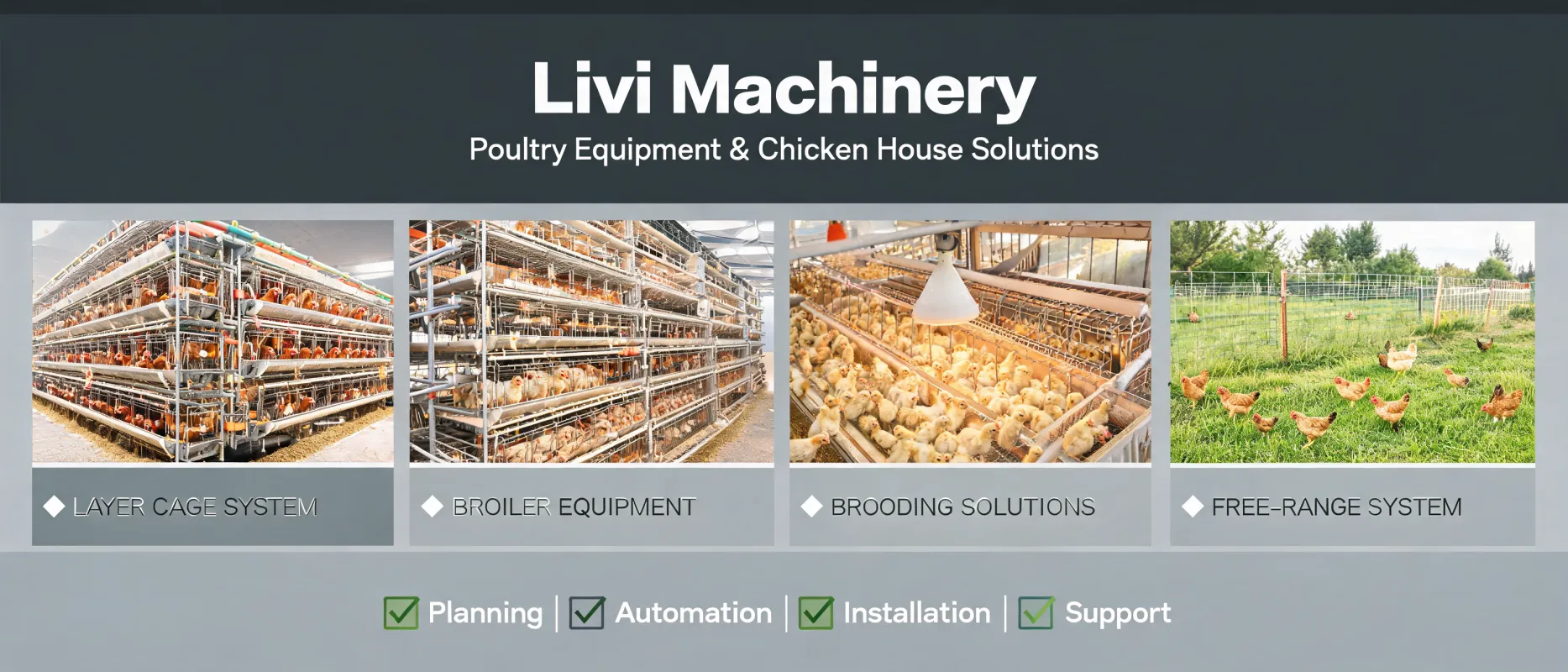
LIVI Machinery, also known as Livi Machinery, focuses on the development and production of poultry farming equipment. Its product range covers cages, pullet cages, layer cages, broiler cages and incubators for different stages of poultry production.
The poultry house design should also consider:
- Ventilation efficiency
- Temperature control
- Manure and waste handling
- Convenience of feeding, drinking and egg collection
- Space for possible future expansion
When the poultry house structure and equipment configuration do not match, daily management may become more difficult and labor requirements may increase.
5. Develop a Complete Project Plan Before Construction
For customers without previous poultry farming experience, it is generally more practical to prepare the complete project plan before starting construction.
- Define the poultry farming type
- Calculate the target bird capacity
- Confirm the sales and marketing approach
- Evaluate the budget and expected payback period
- Design the poultry house
- Select the equipment configuration
- Plan staffing and management procedures
This approach helps identify potential problems before construction begins and reduces the risk of making changes during the building process.
6. Why Plan Before Purchasing Equipment?
Layer, broiler and pullet projects have different investment structures and production cycles. Purchasing equipment before confirming the project requirements may result in:
- A poultry house size that does not match the equipment
- Equipment with unnecessary or insufficient functions
- Investment exceeding the planned budget
- Low operating efficiency
- A longer payback period
For beginners, clearer initial planning can make later operation and management more practical. A poultry equipment provider such as LIVI Machinery can help evaluate the farming direction, site conditions, poultry house design and equipment configuration before the project enters the purchasing stage.
7. Key Advice for Beginners
Define the direction first, then set the capacity; confirm the market, then calculate the investment; prepare the plan, then purchase the equipment.
If you are preparing to build a poultry farm, first organize the five key areas of the project: market, budget, poultry house, equipment and staffing. After these factors are clarified, you can move forward with construction and equipment configuration in a more orderly way.


Hot Products

.jpg?x-oss-process=image/resize,m_fill,h_800,w_800/format,webp)


Popular articles

READY TO START?
Ready to Build Your Poultry Farm?
Tell us your land size, poultry type and farming capacity. LIVI will provide a complete farm solution for your project.